
Deck, Porch, and Railing Repairs Every Home Needs
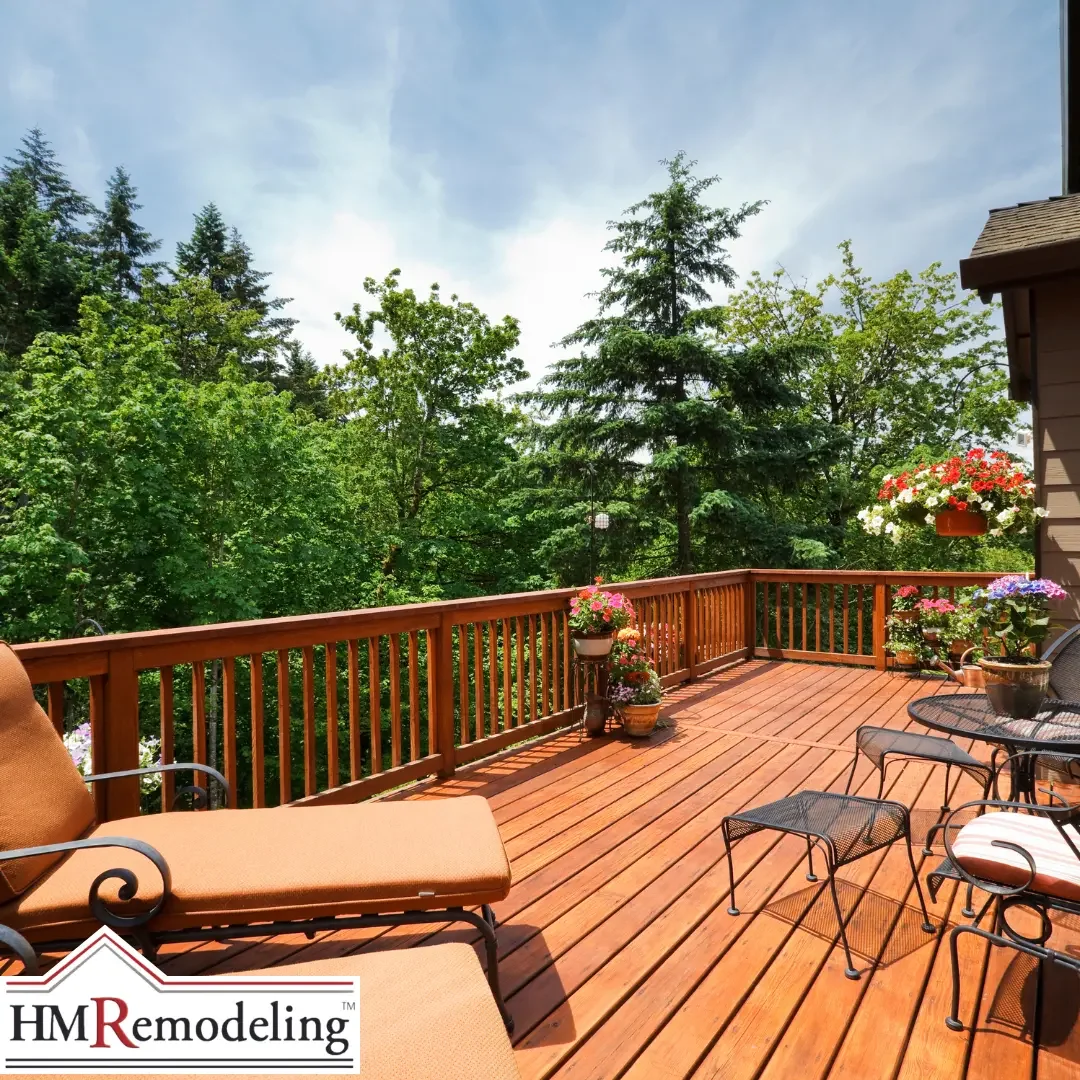
A stained wood deck with railing and seating ready for Michiana summer use
What Indiana Winters Do to Outdoor Structures That Summer Reveals
There is a reliable pattern in South Bend and the broader Michiana area that homeowners with decks, porches, and outdoor structures experience with annual consistency. Winter arrives with the cold, the lake-effect snow, the freeze-thaw cycling that Lake Michigan's proximity creates, and the sustained moisture that Indiana winters deposit on every outdoor surface and into every structural connection throughout the months that outdoor structures sit unused and unexamined beneath whatever the season delivers. And then summer arrives, the household moves outdoors, and the conditions that winter created in those structures announce themselves in ways that casual winter observation from inside the warm house never revealed.
The deck board that has developed the soft, spongy feel underfoot that moisture infiltration and wood fiber degradation produce through freeze-thaw cycling. The porch railing that moves when a hand presses against it with the lateral force that should reveal solid structural resistance but instead reveals a connection that thermal cycling and hardware corrosion have loosened beyond the threshold that safety requires. The post base at the corner of the deck whose contact with retained moisture has been advancing deterioration that the deck's surface appearance never suggested. And the caulking at the ledger board connection between the deck structure and the house wall that has failed silently through winter's thermal extremes, creating the moisture infiltration pathway that every rain event since has been exploiting.
The productive response to what summer reveals is not to use the outdoor space carefully around its compromised conditions while deferring repairs to a future season that will create the same discovery again. It is to assess the conditions thoroughly, repair what repair addresses adequately, and replace what deterioration has advanced beyond repair before the structures serve summer's gatherings at the structural integrity that safe outdoor use requires. HM Remodeling has been helping South Bend and Michiana homeowners address exactly these conditions for nearly twenty years, with an in-house team whose no-subcontractor commitment ensures that outdoor structure repair receives the quality accountability that every project in the company's Michiana service area reflects.
Why Michiana's Climate Creates Specific Outdoor Structure Maintenance Demands
The Michiana area's winters create the freeze-thaw cycling that outdoor wood structures, concrete footings, and hardware connections experience as their most structurally significant annual stress. Water that enters wood fiber, concrete, or hardware connection gaps as liquid expands approximately nine percent when it freezes, creating internal pressure at the precise locations where wood grain, concrete joints, and hardware connection points are most vulnerable. Over multiple freeze-thaw cycles through a single Michiana winter, and accumulated across multiple winters of service, that expansion and contraction advances the deterioration, cracking, and connection loosening that summer assessment consistently reveals.
This freeze-thaw mechanism is specifically more active in the Michiana area than in Indiana's inland communities because Lake Michigan's moderating influence creates more frequent temperature transitions through the freeze-thaw threshold than more consistently cold winter climates produce. A climate that drops well below freezing and stays there through most of winter creates fewer freeze-thaw cycles than Michiana's transitional winter pattern, making freeze-thaw deterioration more pronounced in South Bend area outdoor structures than the absolute winter cold severity alone would predict. Lake Michigan's lake-effect influence also delivers the heavy snowfalls that deposit substantial moisture on outdoor structures, remaining in contact with wood surfaces, post bases, and hardware connections through the extended periods that accumulated snow takes to melt and drain, advancing the sustained moisture contact that wood deterioration and hardware corrosion require.
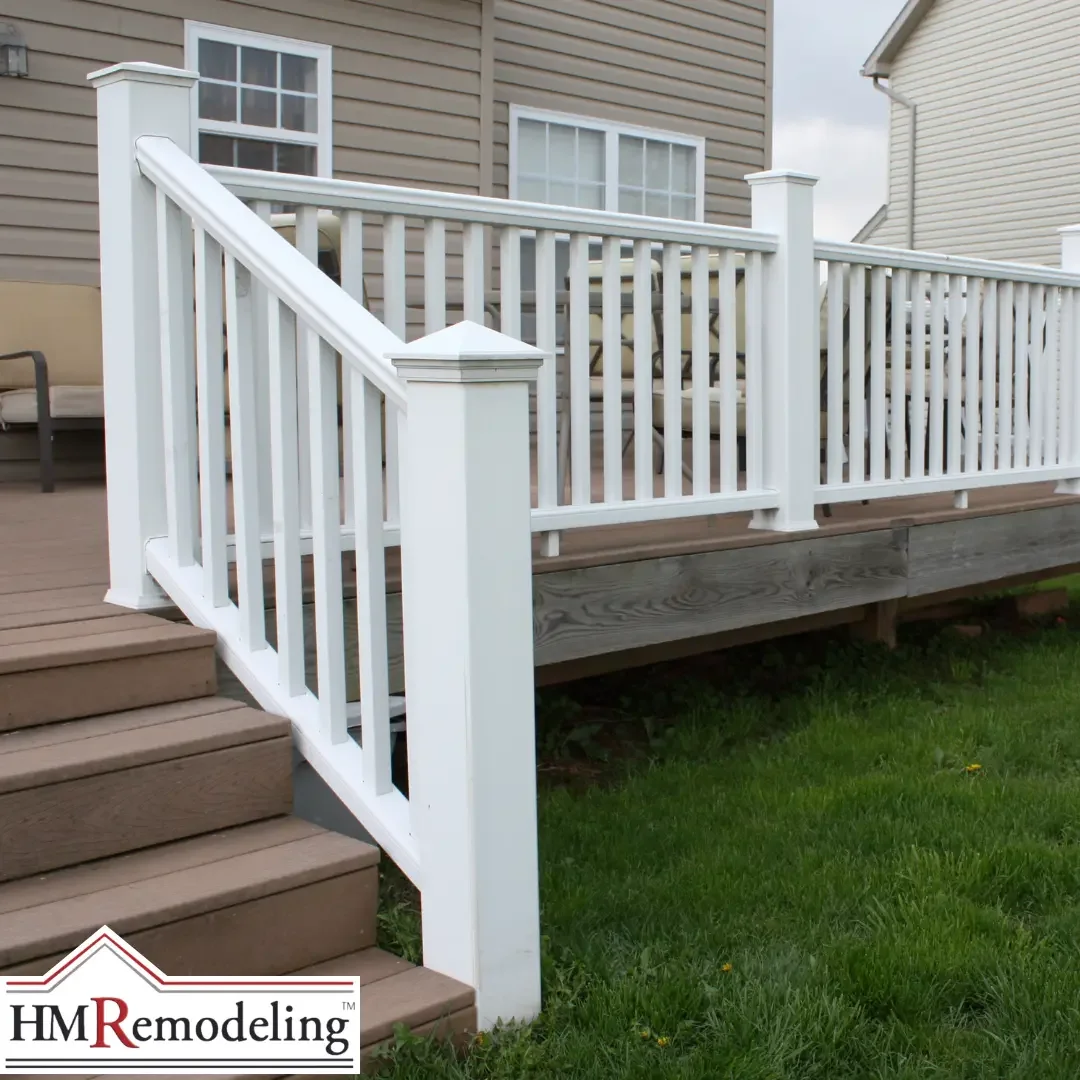
A white deck railing and stairs, the safety check that can't be deferred in Michiana
Deck and Porch Structural Assessment: What to Look For and Why It Matters
Ledger Board Condition and Connection
The ledger board is the deck's attachment point to the house wall, and it is simultaneously the most structurally critical component of an attached deck and the most consistently underassessed element in deck condition evaluation because it is largely concealed behind the deck surface boards. The ledger board and its connection to the house's rim joist carry the live load of every person and piece of furniture on the deck surface and transfer that load to the house structure, making ledger board condition the deck component whose compromise creates the most serious structural risk.
Ledger board deterioration in older South Bend and Michiana decks results from the moisture that inadequate or failed flashing allows to concentrate at the ledger's contact with the house wall, creating the wet wood environment that rot and structural degradation advance through sustained contact. Assessment of ledger board condition requires access behind the deck's surface boards at the house wall connection, which is the specific assessment step that professional evaluation provides and that homeowner visual inspection without board removal or probe inspection cannot accomplish with the thoroughness that this critical component's condition warrants.
Post, Beam, and Joist Condition
Deck posts and beams carry the gravity load of the deck structure and its occupants to the footings below, and their condition reflects both the wood species and treatment used in original construction and the specific moisture conditions each post's placement has accumulated through the deck's service life. Posts in contact with or near grade soil, standing water, or accumulated leaf debris experience the most active deterioration conditions because sustained moisture contact at post bases is the mechanism that wood deterioration exploits most directly in Indiana's outdoor environment. Post base hardware that has been in service for multiple decades may have depleted the zinc coating that galvanization provides as corrosion protection, exposing the steel substrate to the rusting and structural cross-section reduction that unprotected steel in outdoor moisture environments develops progressively.
Deck joists carry the deck surface boards and transfer their load to the beams and ledger board, and their condition throughout the deck structure's span determines the surface stiffness and structural integrity that occupant loading tests with every use occasion. Joist deterioration that has advanced from the ends inward, where end grain moisture absorption creates the most active rot entry point in pressure-treated joist material, creates the soft, springy deck surface that is one of the most commonly noticed indicators of structural deterioration in South Bend and Michiana decks approaching the end of their service life.
Decking Surface Condition and Fastener Assessment
The deck surface boards are the most visually assessed component of any deck condition evaluation, and their surface checking, cupping, splitting, and weathered appearance are all visible indicators of deterioration whose advancement reflects the specific protective treatment history and UV exposure the deck has accumulated. Fastener assessment at deck surface boards identifies the protruding fastener conditions that thermal cycling creates as wood expands and contracts around the fasteners that secure each board to the framing below. Fasteners that have worked above the board surface through multiple thermal cycles create the barefoot hazard and snag point that deliberate fastener correction addresses at every location across the complete deck surface before summer's barefoot use creates the unpleasant contact that protruding fasteners deliver.
Railing Structural Integrity: The Safety Assessment That Cannot Be Deferred
Railing structural integrity deserves specific and separate treatment in any deck or porch assessment conversation because the consequence of railing failure differs categorically from the consequence of other outdoor structure deterioration. A soft deck board creates discomfort. A protruding fastener creates a cut or snag. Compromised railing that fails under the lateral force that a person falling against it creates results in a fall from the deck's height, with the injury potential that fall distance and uncontrolled contact with surfaces below represent.
Railing structural assessment requires deliberate application of lateral, downward, and outward force at multiple points along every railing section, at every post connection, and at the top rail through its full span between posts. The railing that appears visually sound but has developed loose post-to-deck connections through hardware corrosion and wood shrinkage will not reveal its compromised resistance until the force test applies the load that reveals movement at those connections. In Michiana's outdoor environment, where freeze-thaw cycling and extended moisture accumulation advance hardware corrosion in ways that surface appearance doesn't always communicate, the visual inspection conclusion that a railing appears adequate is not the equivalent of the force test conclusion that the system resists lateral loading at the structural adequacy that safety requires.
Baluster spacing in deck railings is also the railing dimension whose code compliance prevents the entrapment hazard that excessive spacing creates for young children. Current building codes require that baluster spacing not exceed four inches. Older Michiana decks whose railings were installed before current spacing requirements were adopted may carry baluster spacing that does not comply with current code, and households with young children whose summer entertaining brings children into contact with non-compliant deck railings warrant specific assessment of baluster spacing alongside the structural integrity assessment that every railing deserves annually.
Porch-Specific Assessment: What Front and Rear Porches Need
South Bend and the surrounding Michiana communities include substantial housing stock from the early through mid-twentieth century in established neighborhoods whose original front porch construction reflects the architectural era of each home's specific construction period. Original porch floors, columns, railings, and the decorative elements that period residential construction incorporated carry architectural character that connects each home to its construction era in ways that generic replacement without sensitivity to that character undermines. Assessment of original porch construction appropriately evaluates condition against the spectrum from sound material requiring only protective treatment to deterioration requiring repair to structural compromise requiring replacement, with replacement decisions guided by the material and profile matching that architectural sensitivity to the home's period character warrants.
The most common deterioration condition in original wood porch columns in Michiana's climate is the base rot that develops from moisture retention at the column's contact with the porch floor surface, where the end grain moisture absorption that the bottom of the column presents creates the sustained wet wood environment that rot exploits most actively. Column base condition assessment that probes the wood at the base contact zone provides the deterioration extent evaluation that visual inspection of the column's visible surfaces alone cannot deliver, because the rot that begins inside the column at the base progresses inward and upward before it becomes apparent at the column's visible exterior surface.
Common Repair Categories and What Each Addresses
Board replacement addressing specific boards whose deterioration has advanced to structural compromise while surrounding boards remain in adequate condition preserves the larger investment of the deck's sound structural framing while addressing the specific members that have reached the replacement threshold. Material matching for replacement boards uses pressure-treated lumber with the appropriate preservative retention level for each specific application location.
Hardware replacement addressing corroded joist hangers, post base hardware, ledger connection hardware, and railing post bases replaces the connection's load-carrying capacity with fresh hardware whose full structural capacity the repaired connection requires. Replacement hardware specification for Michiana outdoor structure applications uses hot-dip galvanized or stainless steel hardware whose corrosion resistance provides the service life appropriate for outdoor structural connections in Indiana's climate.
Railing post resetting for posts whose connections have loosened through hardware corrosion, wood shrinkage, and thermal cycling reinforces the structural resistance that deliberate force testing reveals as compromised. Post resetting approaches depend on the specific connection method the original installation used and the specific deterioration condition the assessment reveals.
Ledger board flashing repair or replacement addressing failed or absent flashing at the critical house wall connection installs the water management system that directs moisture away from the ledger-to-wall contact rather than allowing it to concentrate there, maintaining the dry wood condition at the wall contact that ledger longevity and building assembly protection both require.
Protective treatment for deck and porch surfaces in the Michiana area appropriately uses penetrating stain products formulated for the specific UV and moisture demands that Indiana's outdoor climate creates, applied to properly prepared surfaces. Spring application after the winter-to-summer temperature transition positions the treated surface to serve summer's full use season with fresh protective coverage from the season's beginning.
When Repair Is the Answer and When New Construction Is
Deck and porch structures whose structural framing is fundamentally sound, whose footings are adequately sized and positioned, and whose deterioration is isolated to specific components rather than distributed throughout the structural system represent the repair-appropriate situation where targeted component replacement and comprehensive protective treatment delivers continued service without the full replacement investment that the sound structural framing doesn't warrant.
Deck and porch structures whose structural framing has advanced to the distributed deterioration that isolated component replacement cannot comprehensively address, whose footings are inadequate for the structure's load or current building code requirements, or whose accumulated deterioration has reduced the structure to a condition where comprehensive repair cost approaches replacement cost represent the situations where HM Remodeling's outdoor spaces and new deck construction capability is the more appropriate conversation than repair.
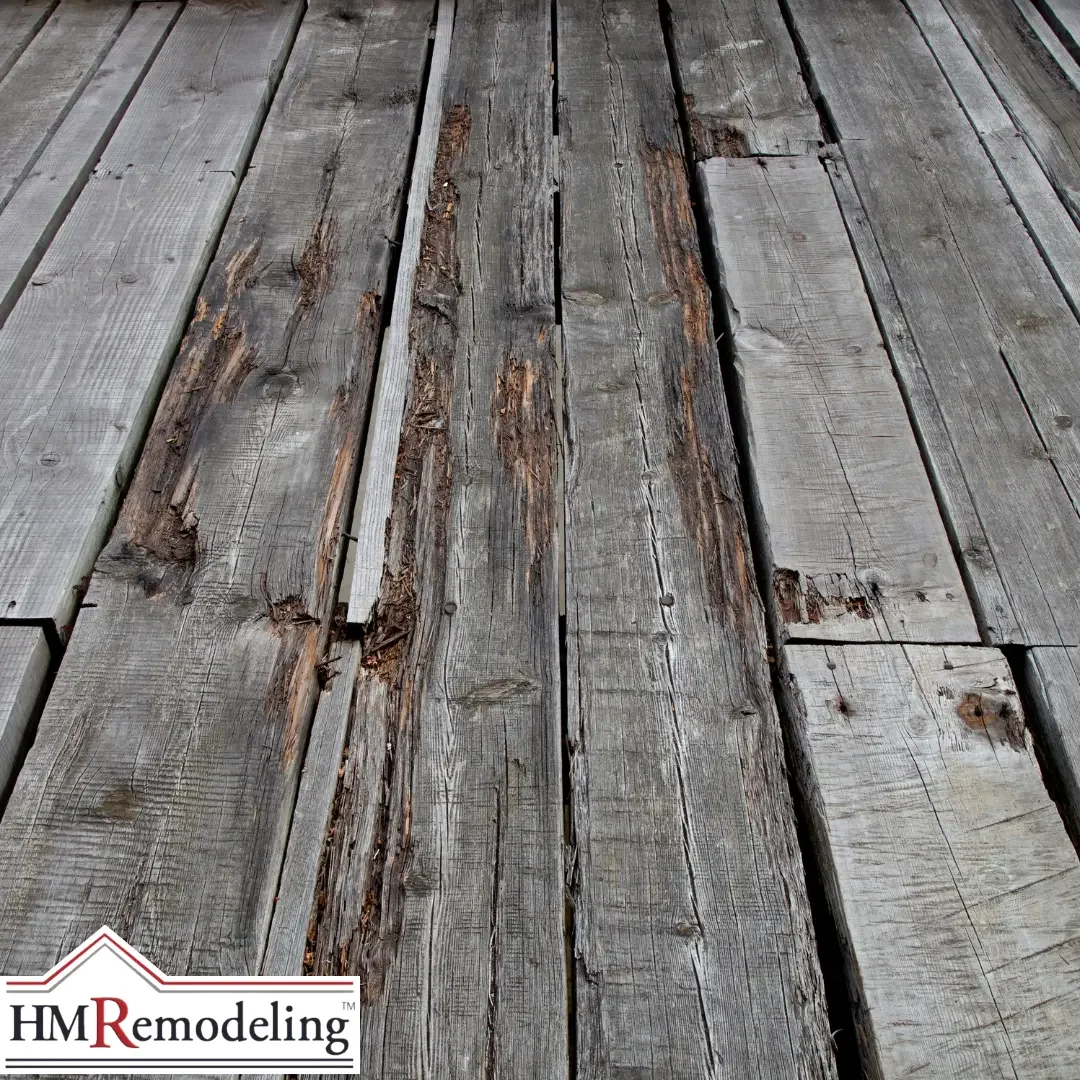
Rotted, splitting deck boards that signal it's time for repair in South Bend
Frequently Asked Questions
How often should South Bend and Michiana homeowners assess their deck and porch conditions? Annual spring assessment after Michiana's winter season has expressed its full effects on outdoor structures and before summer's use brings household members and guests into contact with those structures under full occupancy loading is the assessment timing that regional climate conditions and outdoor structure safety most directly motivate. This annual spring assessment should include the deliberate railing force testing that visual inspection cannot replace, the surface board and fastener walk-through that identifies individual deteriorated members, and the post base and ledger area inspection that accesses the highest-risk deterioration locations that casual observation from the deck surface doesn't reveal.
How does Michiana's lake-effect climate specifically affect deck and porch deterioration rates? The more frequent freeze-thaw cycling that Michiana's transitional winter temperatures create relative to more consistently cold inland climates advances freeze-thaw deterioration through more annual cycles than equivalent cold temperatures without the lake's moderating influence would produce. The heavier snowfall accumulation that lake-effect precipitation delivers deposits more moisture on outdoor structures for longer periods than drier inland winters, advancing the sustained moisture contact that wood deterioration and hardware corrosion require.
What materials does HM Remodeling use for deck repairs in the Michiana area? HM Remodeling specifies pressure-treated lumber with the preservative retention level appropriate for above-ground or ground-contact application depending on each member's proximity to soil or sustained moisture contact. Hot-dip galvanized or stainless steel hardware replaces corroded connection hardware, providing the corrosion resistance appropriate for outdoor structural connections in Michiana's moisture environment. Aluminum or galvanized flashing in appropriate configurations addresses ledger board moisture management, and penetrating stain formulations appropriate for the specific wood substrate and exposure conditions provide the surface protection that South Bend area deck surfaces require.
Does HM Remodeling handle both deck repair and new deck construction in the South Bend area? Yes. HM Remodeling handles both targeted deck and porch repair programs for structures with sound underlying framing and complete new deck and outdoor structure construction for households whose existing structures have reached the end of adequate service life or whose outdoor living vision requires a new structure rather than repair of an existing one. The in-house design team that HM Remodeling includes with every project helps Michiana homeowners develop the specific design plan their outdoor living vision requires before construction begins.
The Outdoor Structure That Serves Michiana Summer Safely
Michiana summers are the season that makes the deck, porch, and outdoor structure worth having. The evening dinners, the weekend gatherings, the casual outdoor hours that Indiana's warm months make available to South Bend and surrounding community households are the occasions that well-maintained outdoor structures serve completely and that compromised structures underserve or, in the specific case of railing failure, make dangerous in the moment that failure reveals what deferred assessment and deferred repair allowed to develop through the seasons between inspections.
HM Remodeling's nearly twenty years of outdoor project experience throughout South Bend, Granger, Mishawaka, Elkhart, and the surrounding Michiana communities provides the regional knowledge that outdoor structure assessment and repair in Indiana's climate requires. The in-house team that performs every assessment and every repair without subcontractors provides the quality accountability that structural repair work specifically demands, and the free design consultation that HM Remodeling provides gives Michiana homeowners the accurate condition assessment and specific project scope that each outdoor structure's situation warrants before any project commitment is made.
Phone: (574) 217-4384 Website:https://hmremodelingsb.com/
Serving South Bend and the Michiana area with dependable service and the expertise your home deserves.
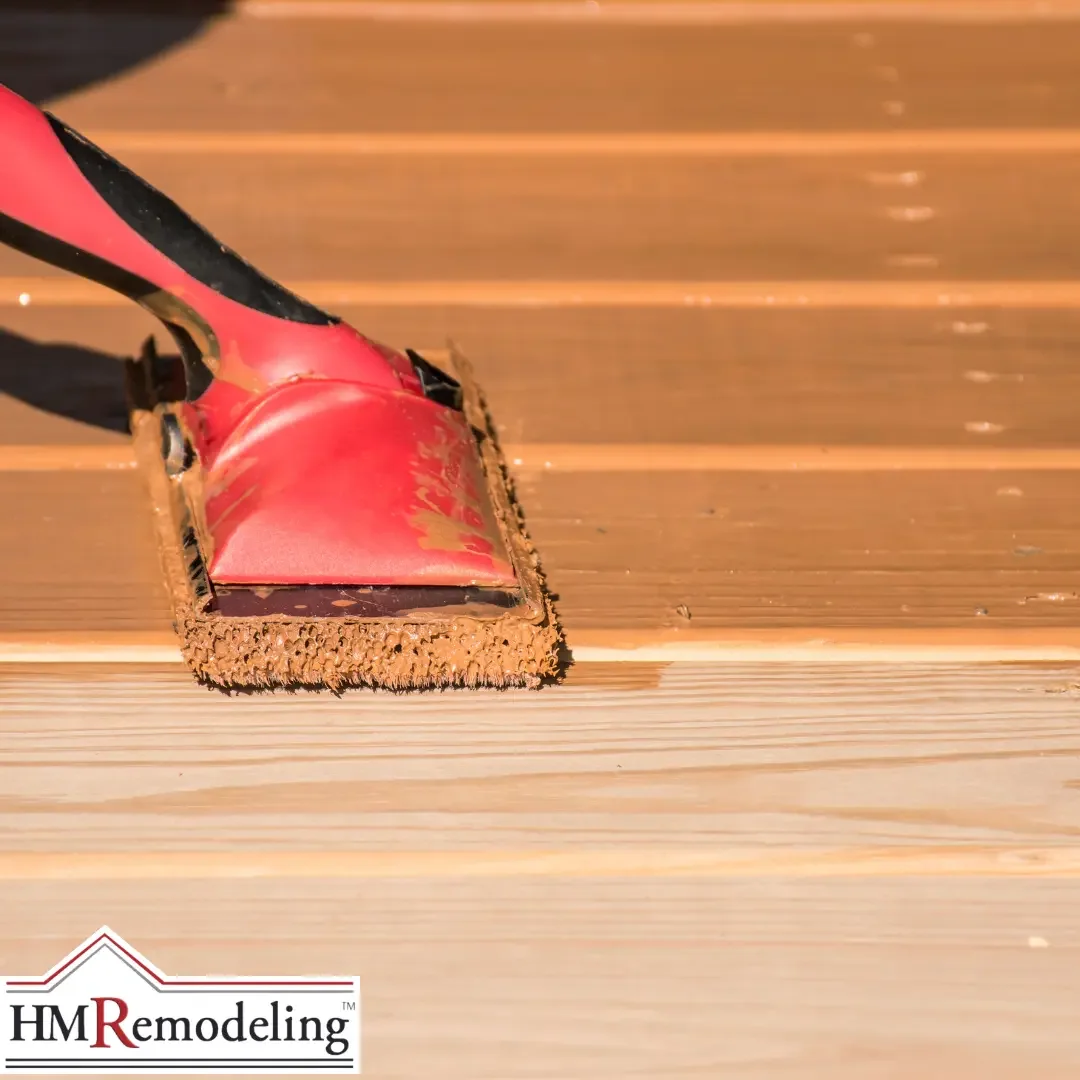
Applying fresh protective stain to a South Bend deck before summer
