
The Benefits of Adding Custom Built-Ins in South Bend
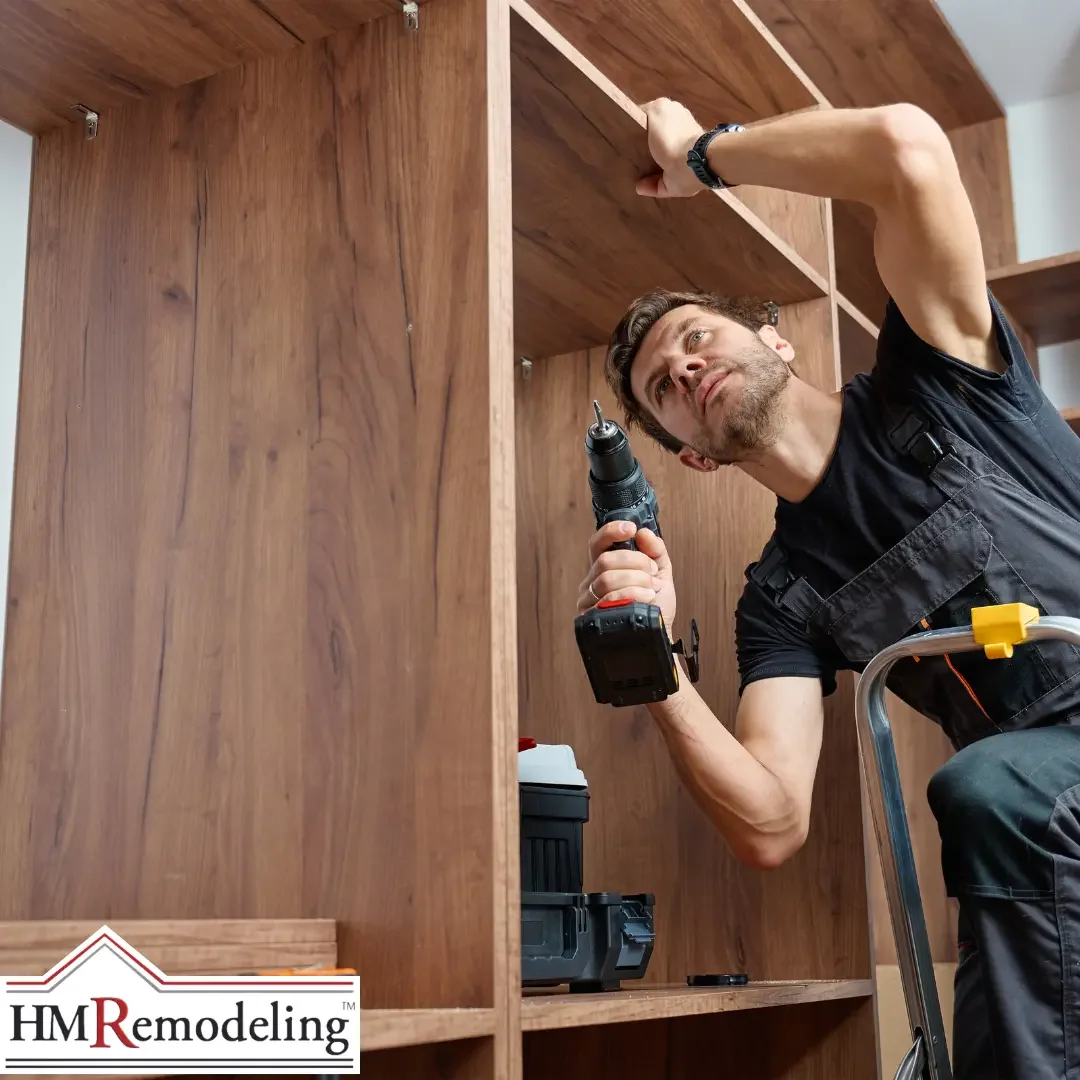
Custom built-in cabinet installation in progress by HM Remodeling, South Bend, IN
Northern Indiana's Living Culture Creates Specific Built-In Opportunities
Custom built-ins in South Bend homes serve the specific functional and lifestyle demands that the Lake Michigan-influenced climate's extended indoor season, the Notre Dame community's sophisticated residential expectations, South Bend's revitalization momentum, and the city's diverse housing stock all together create as the context for storage, display, and organizational investment that generic furniture solutions do not address with the same permanence, customization quality, and architectural integration that built-in carpentry delivers in the Northern Indiana residential environment.
The Lake Michigan climate's extended indoor season is the most distinctively regional factor in the custom built-in investment case for South Bend homes. The extended lake-effect winter concentrates household life indoors through the sustained cold months at rates that moderate climates with shorter heating seasons do not create at the same indoor intensity, and the organizational, display, and functional demands that extended indoor living creates in the living spaces that South Bend households inhabit through those months develop the built-in investment return that the indoor season's length amplifies compared to markets where the outdoor season's greater length reduces the proportional value that indoor quality improvements deliver.
The Notre Dame community's influence on South Bend's residential expectations creates the specific built-in investment context that the university's presence establishes as the quality reference point for the regional residential market. The faculty, staff, and affiliated households whose professional and academic backgrounds reflect exposure to sophisticated residential markets bring the built-in quality expectations that those market experiences established, and South Bend's revitalization momentum has been expanding that quality-aware buyer and homeowner population throughout the city's improving residential landscape. Those quality references specifically reward the built-in investment that communicates architectural permanence and deliberate design investment in the residential evaluation context that South Bend's improving market creates.
The South Bend housing stock's diverse character creates the built-in opportunity that the city's multiple construction eras have produced across the residential landscape. The established neighborhood homes whose mid-century and earlier construction created the room configurations, the wall positions, and the architectural bones that custom built-in carpentry transforms from underutilized space into the organized, functional, and aesthetically integrated environments that built-in investment specifically enables. The newer South Bend suburban developments carry the builder-grade interiors that built-in investment elevates above the generic specifications those construction eras produced as the starting point that deliberate improvement transforms.
The Extended Indoor Season Built-In Case
Living room built-in shelving and cabinetry delivers the organizational and display function that the Lake Michigan winter's extended indoor concentration specifically motivates in the primary living spaces that South Bend households inhabit through the long heating season. The book collections, the media equipment, the family display objects, and the organizational storage that the extended indoor season concentrates household activity around have no natural architectural home in the standard living room that generic furniture and freestanding shelving addresses without the wall integration, the custom sizing, and the architectural quality that built-in carpentry provides at the positions those living space needs create.
The fireplace built-in surround in South Bend homes whose primary living spaces carry the fireplace that the lake-effect winter's extended cold specifically motivates creates the anchoring architectural feature that custom built-in carpentry delivers as the room's organizing element. The built-in shelving flanking the fireplace, the cabinetry concealing media equipment and the seasonal items the extended indoor season accumulates near the hearth, and the mantel that displays the family identity the home expresses through those surfaces all represent the built-in investment that the regional indoor season's fireplace prominence makes specifically meaningful as the living room improvement that architectural permanence most completely delivers.
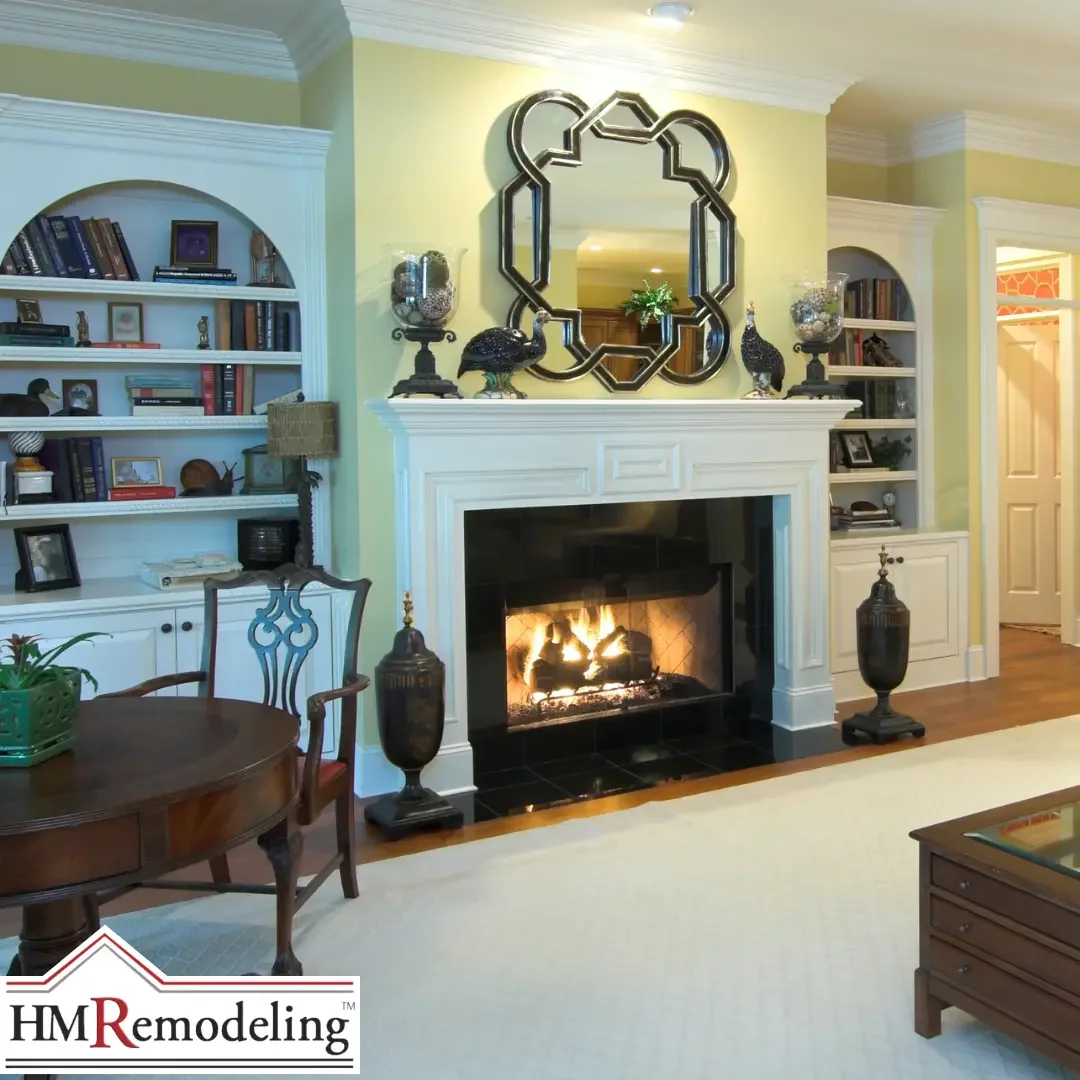
Living room fireplace surround with flanking built-in shelving and cabinetry in a South Bend, IN home
Home office built-ins in South Bend homes reflect the professional and academic culture that the Notre Dame community, the regional healthcare institutions, and South Bend's diverse professional population sustain as the work-from-home demand that dedicated workspace built-ins specifically address. The extended Lake Michigan indoor season amplifies the home office built-in return by concentrating professional activity in those spaces across more indoor days annually than moderate climates with shorter heating seasons create between comparable service intervals.
South Bend Neighborhood Character and Built-In Style
The established Notre Dame corridor neighborhoods whose architectural character reflects the late-nineteenth and early-twentieth century residential traditions those communities developed create the built-in style context that architectural compatibility specifically motivates for those specific locations. The craftsman built-in character, the traditional library and study built-in profiles, and the period-appropriate millwork details that those neighborhood contexts reward distinguish the built-in investment that architectural awareness delivers in those specific South Bend neighborhoods from the generic built-in specifications that construction era compatibility does not inform.
The mid-century South Bend neighborhoods carry the architectural character that informed built-in design adapts to rather than conflicts with through the material selections, the profile choices, and the finish approaches that complement the mid-century residential character those neighborhoods preserve while delivering the organizational function and the current design quality that built-in investment communicates at the architectural detail level.
The newer South Bend suburban developments accommodate the current built-in styles that contemporary residential design favors, and the transition from builder-grade open wall expanses to the organized, lit, and architecturally defined built-in environments that custom carpentry creates delivers the differentiation from the standard builder specification that the built-in investment specifically provides in those development contexts.
The Lake Michigan Humidity Variation Material Consideration
Wood species and finish selection for South Bend built-ins should account for the humidity variation that the Lake Michigan climate creates in the interior environments of regional homes through the contrast between the dry forced-air heating season's low interior humidity and the warm, humid summer's elevated interior moisture. The dimensional stability through that humidity variation that oak, maple, and cherry provide in South Bend built-in applications outperforms the more moisture-sensitive species whose dimensional response the regional humidity cycling advances toward the joint opening and finish cracking that inadequate species selection develops through the Lake Michigan climate's seasonal humidity range.
Kitchen and Dining Built-Ins for South Bend Gathering Culture
The kitchen and dining built-in investments that South Bend homes benefit from reflect the gathering volume, the Notre Dame community's entertaining tradition, and the active social calendar that Northern Indiana's genuine seasonal contrast creates as the kitchen and dining storage demands that custom built-in carpentry specifically addresses in the regional residential context.
Built-in pantry systems in South Bend kitchens address the food storage volume that the regional cooking tradition and the Notre Dame community's gathering culture creates as the pantry capacity that standard kitchen cabinet configurations frequently underserve. The households whose summer gathering activity and the extended indoor season's food preparation traditions sustain the pantry demands that organized built-in storage specifically serves deliver the organizational discipline and the accessible configuration that deep pantry shelving without built-in organization frustrates in daily kitchen use across the full Northern Indiana seasonal calendar.
Dining room built-in buffet and china storage delivers the serving and display storage that South Bend's entertaining culture creates as the dining room function that furniture alternatives address without the wall integration and the architectural permanence that built-in carpentry provides. The serving pieces, the china, and the entertaining accessories that South Bend households accumulate through the gathering culture the Notre Dame community and the regional social calendar sustain have no adequate architectural home in the standard dining room that freestanding furniture addresses without the custom sizing and room integration that built-in carpentry delivers.
The Northern Indiana hard water consideration for built-in installations near kitchen and bathroom plumbing connections warrants the moisture-resistant material specifications and the finish sealant that the regional water chemistry's mineral contact and the lake-effect climate's humidity variation together make specifically important for the built-in investment's longevity at those proximity-to-water positions.
Basement Built-In Investment for South Bend Homes
Finished basement built-in entertainment and storage systems in South Bend homes address the below-grade living space that the regional construction tradition provides in many service area properties as the additional living and organizational square footage that built-in investment converts from generic below-grade space into the organized, functional, and aesthetically integrated environment that extended indoor season living specifically motivates as the basement improvement investment.
Basement moisture confirmation before built-in investment warrants the sump system assessment, the foundation drainage confirmation, and the moisture history evaluation that St. Joseph County's glacial soil dynamics and the lake-effect winter's significant snowmelt create as the below-grade moisture conditions that built-in investment proceeds above only when those conditions have been confirmed adequate through at least one complete Northern Indiana spring moisture loading cycle. Built-in investment in a South Bend basement whose moisture management has not been confirmed through the regional spring conditions proceeds above the moisture foundation risk that the lake-effect climate creates in below-grade spaces whose drainage adequacy the regional snowmelt and spring rainfall tests most directly.
Workshop and hobby built-ins in South Bend basements reflect the craft and hobby traditions that the extended lake-effect indoor season specifically motivates as the below-grade activity that organized built-in storage and workbench systems serve. The tool organization, the material storage, and the workbench integration that basement workshop built-ins provide converts the unfinished or generically organized basement space that many South Bend homes carry into the functional workspace that the regional indoor season's extended duration specifically rewards through every week of the lake-effect winter.
Planning and Execution for South Bend Built-Ins
Winter planning advantage for custom built-in projects in the South Bend market reflects the compressed spring and summer contractor demand that the lake-effect winter's end creates when improvement motivation activates simultaneously across the residential market. Built-in carpentry projects planned during the winter months access the contractor scheduling availability that spring outreach finds progressively more committed against the regional improvement demand concentration that the lake-effect winter's end creates across the South Bend residential market simultaneously.
Material acclimation for Lake Michigan's humidity variation warrants the hardwood and sheet good acclimation to the household's typical humidity conditions before installation that the regional climate's humidity cycling requires for built-in carpentry that will perform through the Lake Michigan winter's dry forced-air heating conditions and the warm, humid summer's elevated interior moisture without the joint movement and finish cracking that inadequately acclimated material develops through those subsequent cycles.
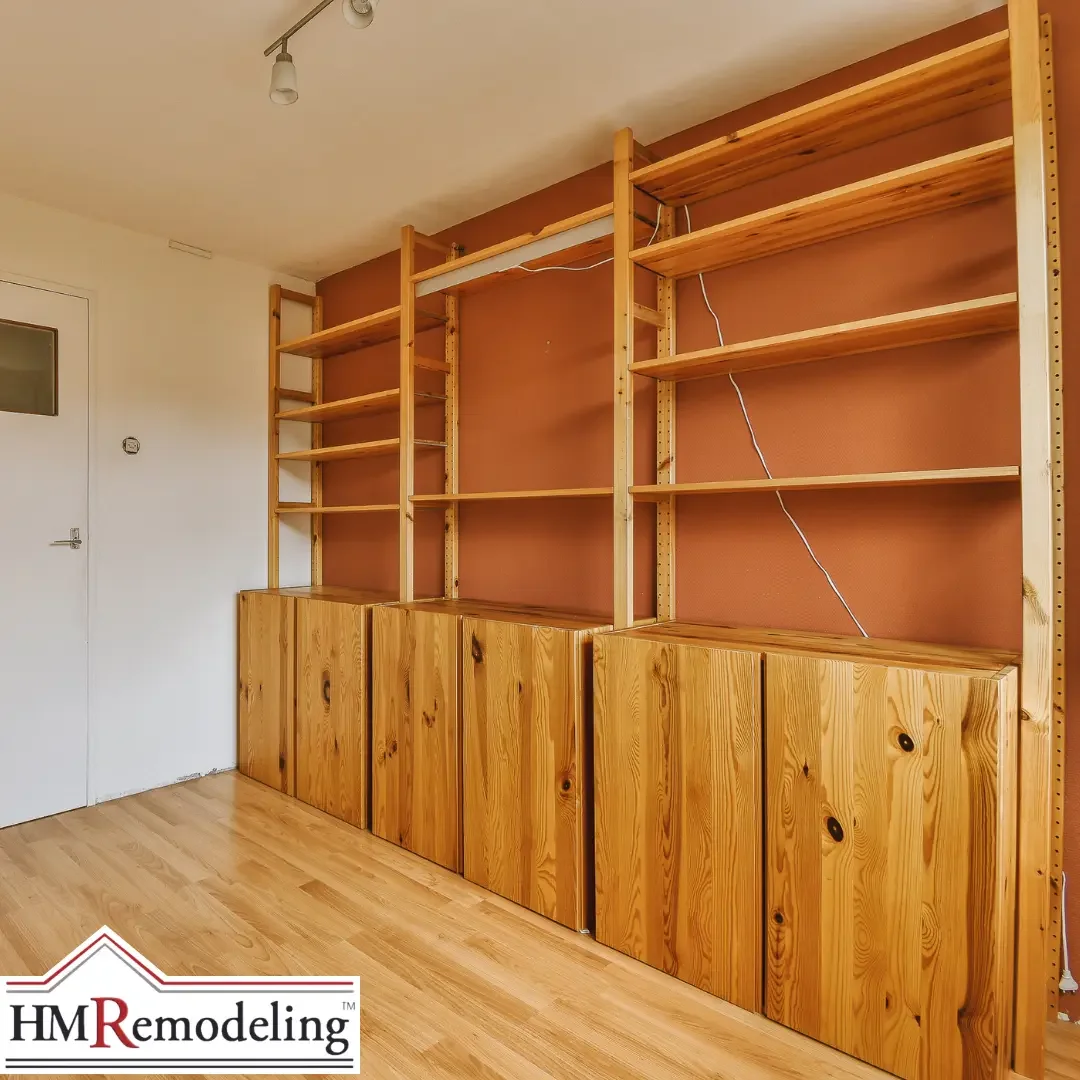
Builder-grade pine shelving unit representing the baseline that custom built-in investment improves in South Bend, IN homes
Frequently Asked Questions
What built-in investment delivers the strongest return in a South Bend home? Living room built-in shelving and cabinetry flanking a fireplace delivers the strongest combined functional and design return for the Lake Michigan climate's extended indoor season and the Notre Dame community's gathering culture. The architectural permanence, the organizational function through the extended indoor months, and the display and gathering quality that the regional social culture sustains all together create the return that the fireplace-anchored living room built-in delivers across the full lake-effect calendar year.
How does the Lake Michigan humidity variation affect built-in material selection? The contrast between the dry forced-air heating season's low interior humidity and the warm, humid summer's elevated moisture creates the dimensional variation that built-in material selection must account for in South Bend homes. Dimensionally stable hardwood species, properly acclimated before installation, and finish specifications that seal against moisture variation all contribute to the built-in performance that the Lake Michigan climate's interior humidity cycling specifically requires for lasting carpentry results.
Is basement built-in investment appropriate for all South Bend homes? Basements with confirmed sump function, adequate foundation drainage, and the moisture management that built-in investment warrants preceding represent the appropriate basement built-in candidates in the South Bend market. Professional moisture assessment before below-grade built-in investment confirms that the basement environment provides the stable conditions that built-in carpentry requires rather than the moisture-variable conditions that the Lake Michigan spring's significant snowmelt creates in South Bend basements whose drainage has not been confirmed before improvement investment proceeds above those conditions.
How long does custom built-in installation take in the South Bend market? Design and planning conversations, material procurement, and shop fabrication before installation runs four to eight weeks for most residential built-in projects. On-site installation for a living room built-in system runs two to four days. Basement entertainment systems with integrated lighting and coordinated cabinetry run four to six days. Winter planning that begins design conversations in January or February provides the timeline that spring or early summer installation completion requires before the gathering season concentrates the social activity those built-in improvements serve.
What maintenance do South Bend built-ins require given the regional humidity variation? Annual inspection of joint conditions at wall connections and internal joint positions that the Lake Michigan climate's humidity cycling advances between the heating season's dry conditions and the summer's elevated moisture provides the monitoring that early intervention requires before joint movement advances to the finish cracking that remediation addresses less effectively than the touch-up that early-stage cycling warrants. Cleaning built-in surfaces with products appropriate for the specific finish the installation carries maintains the appearance the original installation provided through the Lake Michigan climate's seasonal demands.
South Bend Homes Enhanced by the Built-Ins They Deserve
The custom built-in investment that delivers genuine lasting return in South Bend combines the living room and fireplace surround systems that the lake-effect winter's extended indoor season and the Notre Dame community's gathering culture create as the primary social space improvement, the kitchen pantry and dining built-ins that the regional entertaining tradition sustains as the hosting storage demand, the home office built-ins that the Notre Dame community's professional culture motivates as the dedicated workspace investment, and the basement workshop and entertainment systems that the lake-effect indoor season's extended duration and South Bend's full-basement construction tradition create as the below-grade opportunity that moisture-confirmed basements specifically enable. Each built-in investment serving the specific Northern Indiana residential character that the Lake Michigan climate, the Notre Dame community's quality expectations, and South Bend's revitalization momentum together create as the context that lasting carpentry improvement specifically rewards.
HM Remodeling brings the South Bend regional experience to help homeowners plan and execute custom built-in projects that serve Northern Indiana's specific climate demands and lifestyle character.
Phone: (574) 217-4384 Website: https://hmremodelingsb.com/
Serving homeowners throughout South Bend with the remodeling expertise your home deserves.
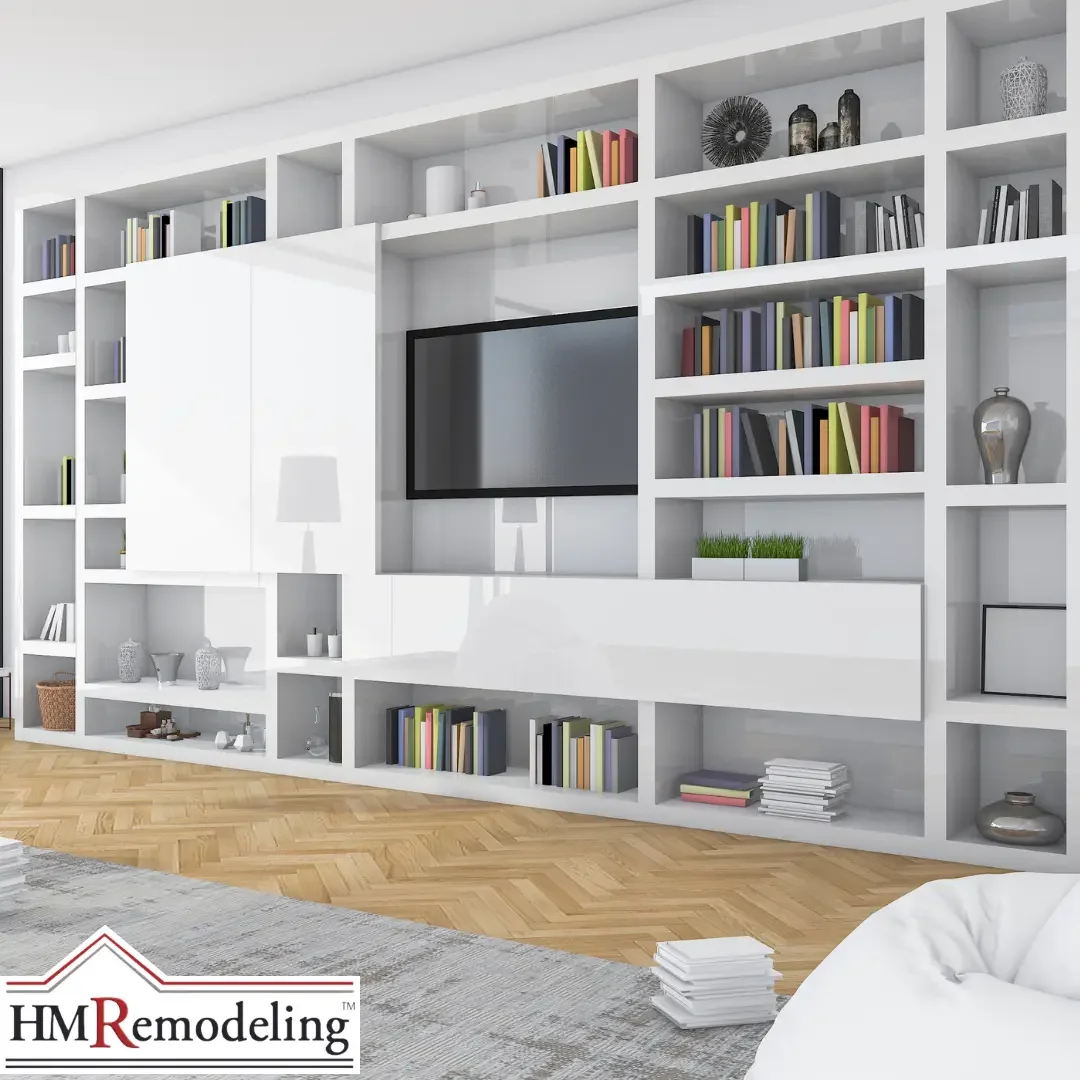
Builder-grade pine shelving unit representing the baseline that custom built-in investment improves in South Bend, IN homes
